
AI and Leadership: Using AI to Control vs. Empower People
by TheCROJo | Oct 6, 2025 | GenAI, Leadership | 0 comments

Here’s a story about two leaders I’ve watched over the past year—a composite of real conversations with clients navigating the same inflection point.
Both stood at the threshold of integrating AI into their teams. Both saw an opportunity. But only one saw it clearly.
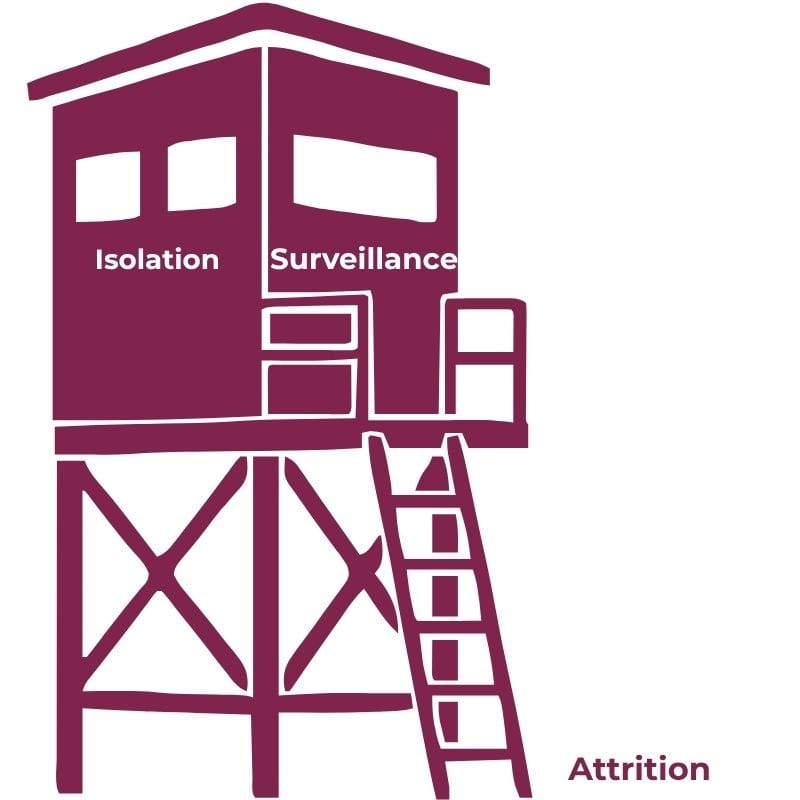
AI as a watchtower
Every meeting recorded. Every transcript parsed. Every conversation quantified. Dashboards tracked who spoke, for how long, and what they committed to. The leader believed efficiency flowed from total visibility—that no time, dollar, or effort should slip through uncaptured.
At first, it felt productive. Metrics climbed. Action items multiplied.
But something else happened.
People stopped speaking freely. The smart, passionate teammates who used to surface problems before they metastasized? They went quiet. Bold ideas evaporated. Risk-taking died.
It wasn’t fear, exactly. It was exhaustion. The constant observation drained them. “I didn’t sign up to be optimized,” one told me in a quiet moment before leaving for a competitor.
The leader had full visibility into an emptying room.
AI as a lighthouse
Deploying AI to surface patterns no human could spot in the noise—bottlenecks, emerging customer trends, early warning signals. But they didn’t use AI to decide. They used it to empower their teams to decide better.
The lighthouse illuminated the landscape. It showed where the rocks were, where the currents ran strong, where safe harbor lay. But it never told anyone which course to sail.
Meetings became richer. Repetitive work automated itself. People found space to create, question, build—and yes, break things in productive ways.
They had clarity. They had autonomy. Most importantly, they had trust.
Progress didn’t just continue. It accelerated. Ownership deepened. Innovation became the norm, not the exception.Deploying AI to surface patterns no human could spot in the noise—bottlenecks, emerging customer trends, early warning signals. But they didn’t use AI to decide. They used it to empower their teams to decide better.
The lighthouse illuminated the landscape. It showed where the rocks were, where the currents ran strong, where safe harbor lay. But it never told anyone which course to sail.
Meetings became richer. Repetitive work automated itself. People found space to create, question, build—and yes, break things in productive ways.
They had clarity. They had autonomy. Most importantly, they had trust.
Progress didn’t just continue. It accelerated. Ownership deepened. Innovation became the norm, not the exception.

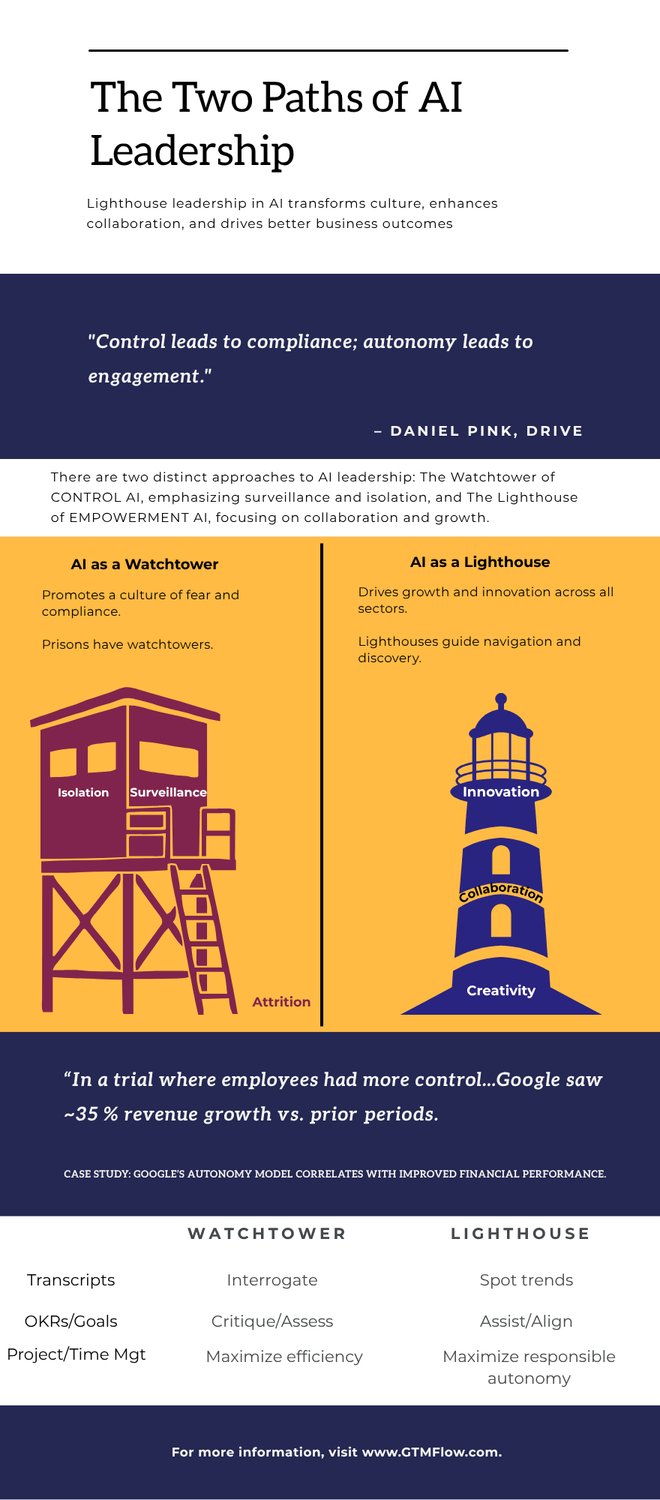
Watchtower vs Lighthouse AI Leadership
One leader wielded AI to control people. The other used it to free them.
And in that single choice, a company either loses its soul or finds it.
This isn’t about the technology. AI doesn’t shape culture—leaders do. The question isn’t whether to use AI, but how you choose to use it. Are you building watchtowers or lighthouses?
The answer determines everything that follows.
GTMFlow Coaches Differently - with Decades of Operational Expertise
Copyright 2026@Gtmflow.com